


 English
 Español

Amy Lou
Tel: +86-13750976592(whatsApp / Wechat)
E-mail: [email protected]

Building a jewelry storage range requires more than deciding how a box should look. Retailers, jewelry brands, wholesalers, and gift packaging buyers need to consider the number of items stored, the dimensions of each piece, access requirements, and the space available for the finished box. A design with several layers can accommodate different jewelry categories, but extra trays also affect overall height, internal organization, material consumption, and packaging costs.
At Yantong Packaging, we approach jewelry storage projects by connecting the box structure with the intended collection and sales channel. Our goal is to help buyers define a practical specification before artwork approval and sample development. The following considerations can help you decide whether a single-layer, double-layer, or three-layer configuration fits your product range.
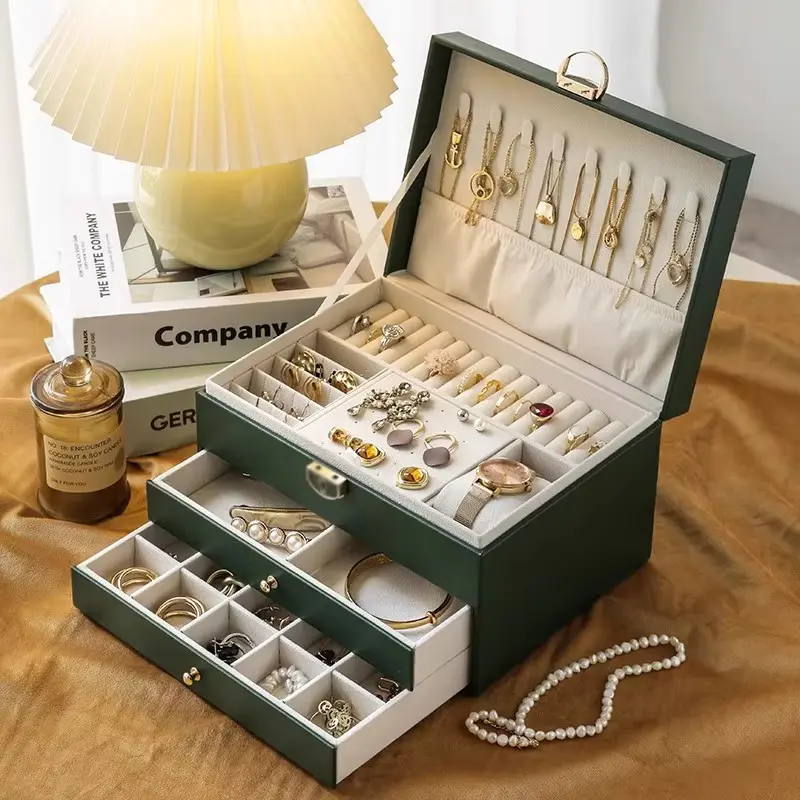
Layer planning begins with an inventory of the jewelry pieces that the box must accommodate. A collection containing rings and small earrings has different storage requirements from an assortment of long necklaces, bracelets, watches, and statement accessories.
Before requesting a quotation from Yantong Packaging, we recommend preparing a product list covering the following details:
This information helps us evaluate whether additional layers provide useful storage space or simply increase the package dimensions. A compact collection may work well with two shallow trays, while a mixed assortment with bulky accessories may need fewer but deeper compartments.
Each structure serves a different purpose. Buyers should compare usable storage capacity, accessibility, overall dimensions, and the complexity of the internal arrangement rather than judging a design by layer count alone.
A single-layer design offers a straightforward arrangement with direct access to the stored items. It suits smaller collections, compact retail sets, and jewelry assortments that do not require extensive separation.
A double-layer structure introduces an additional storage level while keeping the overall arrangement relatively straightforward. Buyers can assign different jewelry categories to separate trays, such as rings and earrings in the upper section and necklaces or bracelets in the lower section.
A Three Layer Multifunctional Jewelry Storage Box can accommodate a broader assortment through several distinct storage levels. This structure may suit jewelry retailers, gift programs, and storage product ranges that need separate spaces for small accessories and larger pieces.
Adding a third layer is worthwhile only when the extra compartment space serves a defined purpose. A well-planned double-layer box can be more practical than a taller structure with narrow, difficult-to-access compartments.
External dimensions do not represent the actual storage capacity. Sidewalls, tray partitions, lining materials, and structural supports all occupy space inside the box. Buyers should establish the internal layout before approving the finished dimensions.
Our packaging planning process considers several measurements:
For example, a planning sketch might use a tray measuring 200 × 150 mm as an initial design reference. This is an illustrative measurement rather than a fixed product specification. The actual dimensions should be calculated from the jewelry assortment, insert construction, and intended storage capacity.
Yantong Packaging can use the agreed dimensions and layout requirements to evaluate a suitable box structure before the final specification is confirmed.
Several layers are easier to use when each section has a defined role. Dividing the interior according to jewelry type also helps buyers explain the product's organization to retailers and end users.
A possible three-layer arrangement could follow this configuration:
This arrangement is a planning example, not a universal specification. Some collections contain many earrings but few necklaces, while others focus on large bracelets or statement jewelry. The tray layout should reflect actual inventory rather than follow a standard arrangement without modification.
The outer box and its internal components work together. A visually appealing exterior cannot compensate for trays that bend, partitions that shift, or inserts that allow delicate pieces to move freely.
Paperboard and rigid-board structures can support different jewelry storage formats. The appropriate construction depends on the finished dimensions, expected contents, opening design, and presentation requirements. Thicker board may provide additional rigidity, but the final choice should also account for weight, assembly, and the intended distribution channel.
Insert materials may include paperboard, foam, fabric-covered supports, or other suitable cushioning components. Each option has different thickness, flexibility, surface characteristics, and manufacturing requirements.
Buyers should also consider the relationship between the insert and the outer dimensions. A thicker cushion or additional partition reduces usable space, so insert details need to be included in the structural specification.
A jewelry box intended for a boutique counter may have different priorities from a product sold through an online store. Retail display places emphasis on presentation and access, while e-commerce distribution requires attention to package dimensions, movement control, and protection during handling.
Our planning checklist includes the following questions:
For online orders, the internal arrangement should limit unwanted movement, and the shipping carton should provide suitable protection around the jewelry box. A three-layer design may require additional support during packing because of its height and removable components.
Retail buyers should also consider how customers will access each section. A box that stores many pieces but requires awkward handling may not meet the intended user experience.
Layer count affects more than the amount of storage space. Additional trays may increase material consumption, assembly work, insert complexity, finished dimensions, and shipping volume. Buyers should review these factors together before approving a design for a bulk order.
At Yantong Packaging, we recommend comparing proposed configurations against a shared specification rather than requesting prices based on layer count alone.
A useful comparison should include both the unit quotation and the practical value of the additional storage space. A more complex design may be justified for a broad jewelry assortment, while a compact structure may suit a smaller product range.
Drawings and digital mockups help communicate a concept, but a physical sample provides a clearer basis for checking usability and construction. Sample evaluation is especially important for multi-layer boxes because small dimensional differences can affect tray movement and clearance.
We recommend reviewing these points during sample approval:
Any required changes should be recorded before production approval. This gives the purchasing team and packaging supplier a shared reference for dimensions, materials, artwork, and assembly requirements.
A detailed inquiry helps Yantong Packaging evaluate the project and provide a quotation based on the actual requirements. Buyers do not need a complete engineering drawing at the beginning, but the available product information should be as specific as possible.
Include the following details in your inquiry:
Sharing these details allows the proposed structure, material choices, and quotation to be evaluated against the same project requirements. Unconfirmed specifications can be discussed during the design stage rather than treated as fixed product details.
The appropriate number of layers depends on the jewelry assortment, the usable space required for each piece, and the way the box will be stored, displayed, and shipped. Single-layer designs suit compact collections, double-layer structures offer additional separation, and three-layer configurations can support broader assortments that need several distinct storage areas.
At Yantong Packaging, we encourage buyers to define the collection, map the internal compartments, review the outer dimensions, and test a physical sample before confirming a bulk order. A clear specification helps align design decisions with practical storage needs and purchasing budgets.
Planning a new jewelry storage range? Contact Yantong Packaging with your jewelry dimensions, preferred box structure, material requirements, and estimated order volume. Our team can review the project details and discuss a suitable packaging configuration for your market.

5F, Building 1, No#8, Jiangwan Street, Yiwu City, Zhejiang Province, China, 322000 CN
