


 English
 Español

Amy Lou
Tel: +86-13750976592(whatsApp / Wechat)
E-mail: [email protected]

Packaging dimensions influence more than the appearance of a product on a store shelf. They affect how items are arranged, how many units fit into a shipping carton, how products move through distribution channels, and how much storage space retailers need. For brands working with different product categories, standard box sizes may not always match their actual packaging requirements. At Yantong Packaging, we develop custom size packaging boxes around product measurements, retail presentation plans, and transportation conditions to help customers coordinate these requirements before production begins.
A box designed exclusively around the product may still create difficulties during transportation or retail display. A suitable packaging specification needs to consider several connected factors, including internal dimensions, external measurements, structural materials, protective inserts, stacking arrangements, and carton configurations. Understanding these details helps purchasing teams communicate their expectations more accurately and avoid unnecessary design changes during manufacturing.
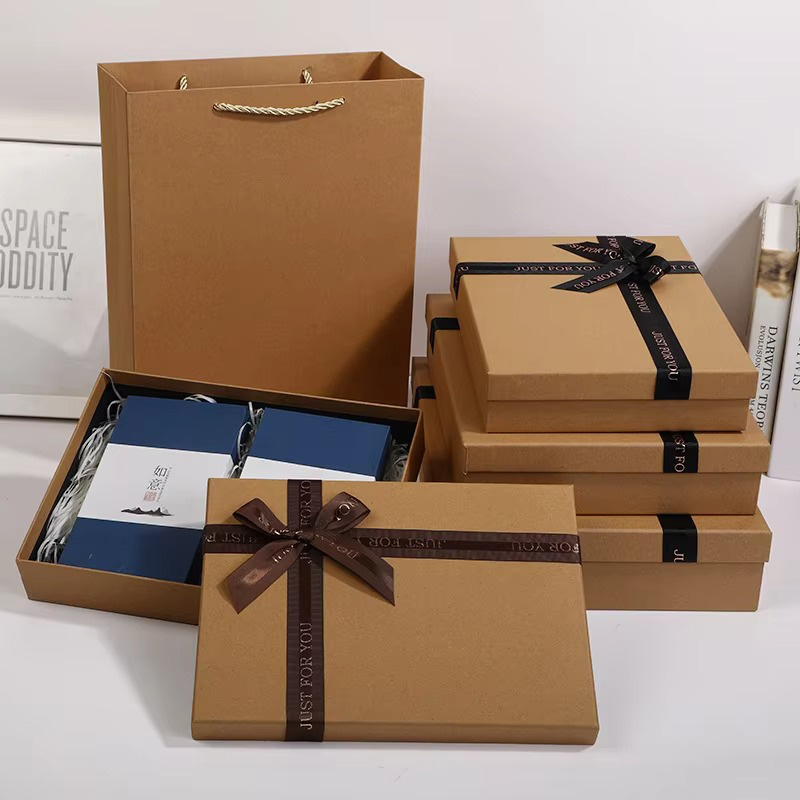
Retail packaging and shipping packaging serve different purposes, but their dimensions are closely connected. Retail boxes need to fit display areas and support product presentation, while shipping cartons need to accommodate multiple units without excessive empty space or insufficient protection.
Our packaging development process considers both stages rather than treating them as separate design tasks.
A packaging design that works well on a shelf but occupies excessive shipping volume may increase distribution expenses. Similarly, a compact box that cannot be displayed properly may require additional fixtures or adjustments at the retail stage.
Our recommendation is to establish the intended sales and distribution channels during the initial design discussion. This gives our design team a clearer understanding of the dimensional restrictions before preparing structural drawings and samples.
Accurate measurements are the foundation of custom packaging development. Buyers sometimes provide only the length, width, and height of the product. However, these figures do not always account for protective inserts, product orientation, closure structures, or the space required for accessories.
At Yantong Packaging, we recommend preparing a complete measurement specification that covers the following details.
The internal dimensions determine whether the product can enter the box comfortably and remain properly positioned after packing. Length, width, and height should be measured at the widest or tallest points of the actual product.
Internal and external measurements are not interchangeable. Board thickness, wrapping paper, lamination, and structural construction all affect the finished outer size.
Rigid gift boxes, for instance, may use grey board with a thickness ranging from 1.5 mm to 3.0 mm, depending on the structure and intended application. The covering paper adds another layer to the finished dimensions. Folding cartons generally use thinner paperboard, with specifications determined by product weight, box structure, and printing requirements.
Our technical team checks these dimensional differences during sample development. A clear distinction between internal and external measurements helps reduce fitting problems during assembly and packing.
Custom box dimensions cannot be evaluated independently of box construction. Two packages with identical external measurements may have different internal capacities, opening methods, and stacking characteristics.
We provide several structural options to accommodate different retail and shipping conditions.
Rigid boxes are frequently used for jewelry, watches, cosmetics, and corporate gifts. Their solid construction supports a defined shape and a more substantial presentation.
Rigid packaging generally retains its shape during retail handling. However, its fixed construction may occupy more space during transportation than a collapsible alternative. Buyers should therefore evaluate the balance between presentation requirements and shipping volume.
Folding cartons offer a different approach. Their flat or partially assembled structure can reduce the volume required for transporting empty packaging. This option is relevant to businesses that manage large quantities of retail packages or distribute products through multiple warehouses.
Paperboard thickness, crease positions, locking tabs, and folding dimensions need to be coordinated during structural development. An unsuitable crease arrangement may affect the finished box shape, while insufficient locking strength can create problems during handling.
We use die-cutting and laminating equipment to develop folding structures according to the customer's drawings and functional requirements.
Some brands need the appearance of rigid packaging but also want to reduce the volume occupied by empty boxes. Foldable rigid structures provide another option for these projects.
The folding mechanism, corner construction, adhesive positions, and assembly process require careful coordination. We can evaluate these details during sample development to check whether the structure meets the intended retail and distribution conditions.
Shipping carton configuration is an important part of packaging procurement. The dimensions of individual retail boxes determine how many units can be arranged inside a master carton and how efficiently the cartons fit onto pallets.
Our design team considers several factors during this stage.
A simple calculation can help illustrate the relationship between retail box dimensions and carton capacity.
Suppose an individual retail box measures 200 × 150 × 60 mm. A master carton with internal dimensions of 420 × 320 × 260 mm could accommodate two boxes along the 420 mm side, two along the 320 mm side, and four layers along the 260 mm side, subject to the actual orientation and packing arrangement.
This gives a theoretical capacity of 16 retail boxes. Actual packing capacity must also account for carton wall thickness, protective materials, dimensional tolerances, and the stability of the finished arrangement.
Such calculations provide a useful starting point for packaging discussions. A physical packing test remains necessary before confirming the final shipping specification.
Retail compatibility involves more than fitting a package into a particular shelf space. Product visibility, label placement, opening direction, and display orientation can all influence the final structural design.
We encourage customers to provide the following information during the customization stage:
These details help us coordinate structural dimensions with printing and finishing requirements. A box with a transparent PET window, for example, needs sufficient space for the window frame, internal product positioning, and any supporting insert.
Retail display requirements may also differ between physical stores, department stores, specialty shops, and e-commerce fulfillment operations. A single packaging specification should be evaluated against the actual sales channels rather than assumed to suit every distribution method.
Material selection has a direct relationship with box dimensions, structural strength, and the finished appearance. Our packaging solutions use paperboard, grey board, fabric, PU leather, plastic components, and other materials according to the product category and design requirements.
Several construction details deserve attention during customization:
For example, a jewelry box with a flocked EVA insert needs a cavity that matches the jewelry dimensions and insert thickness. A cosmetic gift box containing several bottles requires separate compartments to prevent contact between the containers during transportation.
We review these construction details together rather than treating material, appearance, and dimensions as independent specifications.
Technical drawings provide the basic dimensions and structural information, but a physical sample allows buyers to examine the actual packaging construction. Sample confirmation is particularly valuable for projects involving unusual product shapes, multiple compartments, rigid structures, or tight retail display restrictions.
Our customization process includes design development, sampling, production, quality inspection, and delivery. Each stage addresses different requirements.
At Yantong Packaging, our sample cutting machines and die-cutting equipment support structural verification before bulk manufacturing. Our automated production lines also include box-forming, laminating, V-grooving, and assembly equipment.
With more than 20 years of packaging industry experience, a workshop covering over 6,000 square meters, and ISO 9001, FSC, and BSCI certifications, we provide manufacturing support for different packaging categories and international markets.
A detailed inquiry helps us assess the project more accurately and recommend a suitable box structure. Rather than providing only a reference image, buyers can prepare a basic technical brief covering the following points.
Drawings, product photographs, physical references, and existing packaging samples can also help our team understand the intended construction. Our design and R&D specialists can then evaluate the dimensions, material combinations, and structural details before preparing a production proposal.
At Yantong Packaging, we work with customers to coordinate box structures, materials, internal components, and finished dimensions according to their product and market requirements. Our manufacturing capabilities cover jewelry boxes, cosmetic packaging, food gift boxes, watch boxes, garment packaging, and other customized solutions.
Whether your project involves a compact retail carton, a multi-compartment gift box, or a rigid presentation package, our team can assist with design development, sample confirmation, and production planning. Share your product measurements, packaging references, and retail or shipping specifications with Yantong Packaging to discuss a box design that fits your actual business requirements.

5F, Building 1, No#8, Jiangwan Street, Yiwu City, Zhejiang Province, China, 322000 CN
